
What is IoT?: Internet of Things

Updated: May 20

The internet is no longer limited to phones, laptops, and gaming PCs running hot enough to cook ramen. Everyday objects are now connected too.
Smart TVs, thermostats, refrigerators, doorbells, light bulbs, security cameras, watches, and even coffee makers can all connect to the internet.
This massive network of connected devices is known as the Internet of Things, commonly shortened to IoT.
At its core, IoT refers to physical devices that collect, send, and sometimes act on data using an internet connection. These devices often communicate with apps, cloud servers, or even other devices automatically with little or no human interaction.
In simpler terms:
IoT is when normal objects become computers with internet access.
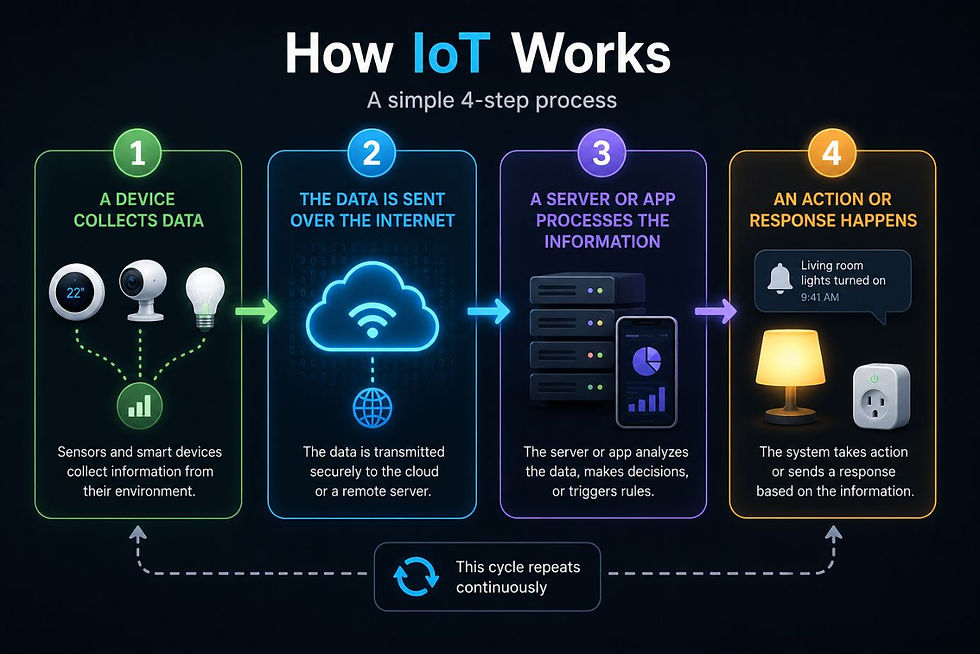
How IoT Works
Most IoT devices follow a fairly simple process:
A device collects data
The data is sent over the internet
A server or app processes the information
An action or response happens
For example:
A smart thermostat detects the room temperature
It sends the data to an app or cloud service
The system decides the house is too warm
The air conditioning turns on automatically
The same concept applies to smart watches tracking your heartbeat, security cameras detecting movement, or smart lights turning on when you walk into a room.
Underneath all the marketing buzzwords, IoT devices are essentially small computers with:
Sensors
Software
Internet connectivity
Some form of automation
What Makes Something an IoT Device?
Not every electronic device is automatically considered an IoT device.

The key difference is whether the device can:
connect to a network or the internet
collect or share data
communicate with other systems or apps
perform actions automatically or remotely
For example, a normal lamp that only turns on with a physical switch is not usually considered IoT.
However, a smart lamp that connects to Wi-Fi, can be controlled from a phone app, reacts to schedules, or works with voice assistants would be considered an IoT device.
The same idea applies to many everyday objects. Once a device becomes internet-connected and capable of sharing or reacting to data, it generally falls into the IoT category.
Common Examples of IoT Devices
You may already own several IoT devices without even realizing it.
Some common examples include:
Smart TVs
Smart speakers
Video doorbells
Wi-Fi security cameras
Smart thermostats
Smart locks
Fitness trackers and smart watches
Smart refrigerators
Robot vacuums
Connected vehicles
Even devices like wireless printers count in many cases.
Why IoT Became So Popular
IoT devices exploded in popularity because they offer:
Convenience
Automation
Remote access
Data tracking
Energy efficiency
Smart home integration
Being able to control lights, cameras, or appliances from your phone feels futuristic and useful. Businesses also use IoT heavily for:
Inventory tracking
Industrial monitoring
Smart sensors
Logistics
Healthcare equipment
Agriculture systems
Modern farms even use internet-connected moisture sensors and automated watering systems. Humanity really went from “stick in dirt” to “AI-assisted tomato optimization” surprisingly fast.


Comments